
The Ultimate Guide to the Perfect Chicken Nugget Box
In the fast-paced world of fast food and takeaways, the humble chicken nugget reigns supreme as a favourite across the United Kingdom. From late-night snacks to children’s parties, these golden bites of joy are a staple. However, the experience of eating them is heavily influenced by how they are served. A soggy, lukewarm nugget is a disappointment, whereas a crisp, hot one is a delight. The secret to maintaining that quality lies almost entirely in the packaging.
This guide explores the essential role of packaging in the food industry, specifically focusing on how to choose the right container for fried chicken products. We will delve into material choices, design importance, and how the right box can elevate your brand from a standard takeaway to a premium dining experience. Whether you run a high-street fried chicken shop or a gourmet food truck, understanding these nuances is key to customer satisfaction.
Why Packaging Matters for Fried Foods
Fried foods present a unique set of challenges for packaging. They are hot, often oily, and rely on a specific texture—crispy on the outside, moist on the inside—to be enjoyable. If you put hot nuggets into a sealed plastic container, the steam gets trapped, condensation forms, and the crispy coating turns into a mushy mess within minutes. This is where specialized packaging comes into play.
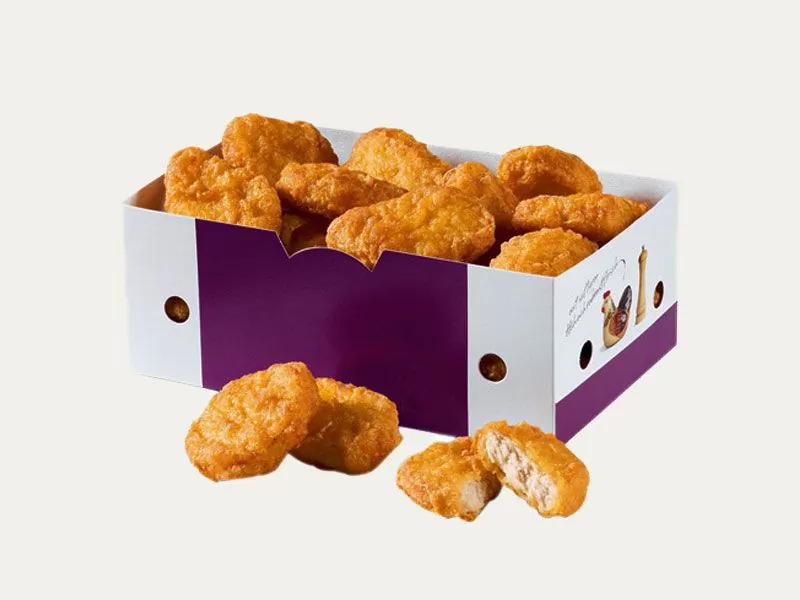
A high-quality Chicken Nugget Box is engineered to manage these issues. It typically features ventilation holes or breathable materials that allow steam to escape while retaining enough heat to keep the food warm. This balance is critical. Furthermore, the material must be grease-resistant. Nothing ruins an appetite faster than a box that is sodden with oil, staining car seats, laps, or tablecloths. The structural integrity of the box is also vital; it needs to protect the food during transit, whether that’s a delivery driver navigating potholes or a customer walking home.
In the UK market, where takeaway culture is thriving, the visual appeal of packaging is also a significant factor. It is the first physical touchpoint a customer has with your brand after ordering. A sturdy, well-designed box suggests quality and care, setting the stage for a positive meal experience.
Choosing the Right Materials
When selecting packaging for nuggets, the material is the foundation of your choice. In the UK, there is a strong push towards sustainability, which influences both business decisions and consumer preferences.
Cardboard and Paperboard: These are the industry standards for a reason. They offer excellent rigidity, which prevents crushing, and they are naturally breathable. High-quality paperboard is often coated with a food-safe, grease-resistant layer (often clay or a thin poly-lining) to prevent oil absorption. This ensures the box remains clean and firm throughout the meal.
Corrugated Board: For larger portions or delivery-heavy business models, corrugated board is an excellent option. It consists of a fluted layer sandwiched between two flat liners. This construction provides superior insulation, keeping food hotter for longer—a crucial feature for delivery services in the UK’s often chilly climate. It also offers enhanced crush resistance.
Eco-Friendly Options: Modern consumers are increasingly eco-conscious. Many businesses are moving towards Kraft board, which is unbleached and often made from recycled fibres. It has a rustic, natural look that appeals to the artisanal market. Compostable and biodegradable coatings are also becoming more available, allowing businesses to offer grease resistance without relying on traditional plastics.
The Power of Branding and Design
Your packaging is free advertising space. Every time a customer carries your box down the street, sits in a park to eat, or posts a photo of their meal on social media, your brand is being seen. Utilizing Chicken Nugget Boxes as a marketing tool is a smart strategy for growth.
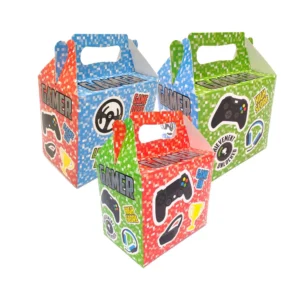
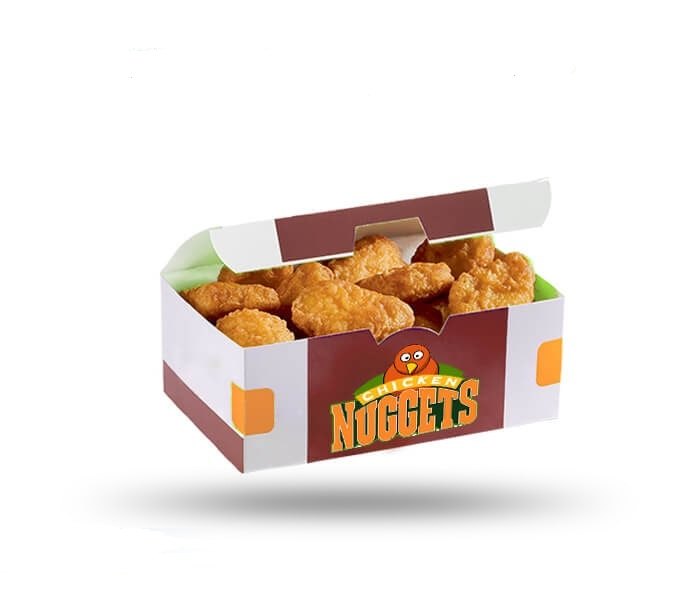
Effective design goes beyond just a logo. It involves using your brand’s colour palette to create recognition. It might include catchy slogans, social media handles, or even QR codes that lead to menus or loyalty schemes. The shape of the box also contributes to the design aesthetic. Clamshell boxes are classic and easy to use, while gable boxes (with handles) add a fun, “happy meal” element that is convenient for carrying.
Consistency is key. If your shop has a modern, minimalist vibe, your packaging should reflect that with clean lines and simple typography. If you are a family-oriented, fun brand, bright colours and playful graphics are more appropriate. The goal is to create a cohesive brand identity that resonates with your target audience.
Optimizing for Delivery and Takeaway
The rise of third-party delivery apps has transformed the food landscape in the UK. Packaging now has to survive a journey on the back of a bike or scooter. This means that lid security is paramount. A box that pops open easily can lead to spilled food and unhappy customers.
Locking mechanisms on Nugget Boxes are a simple but effective feature. Tabs that slot securely into place ensure the lid stays closed until the customer is ready to eat. Stackability is another logistical consideration. Flat-topped boxes can be stacked easily in a delivery bag, maximizing space and stability. Tapered designs, while sometimes aesthetically pleasing, can be difficult to stack and transport in bulk.
Furthermore, portion control is made easier with the right box sizes. Offering small, medium, and large boxes allows you to standardize portions, controlling food costs and ensuring customers feel they are getting value for money. It eliminates the guesswork for staff during a busy rush.
Customisation: Standing Out in a Crowded Market
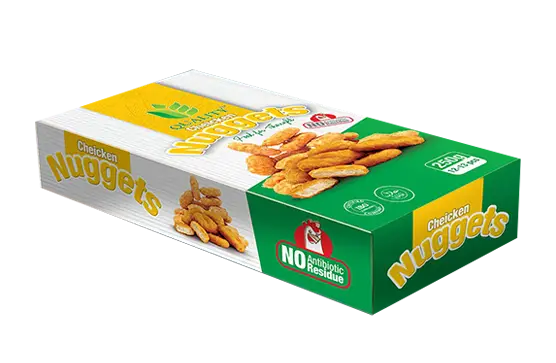
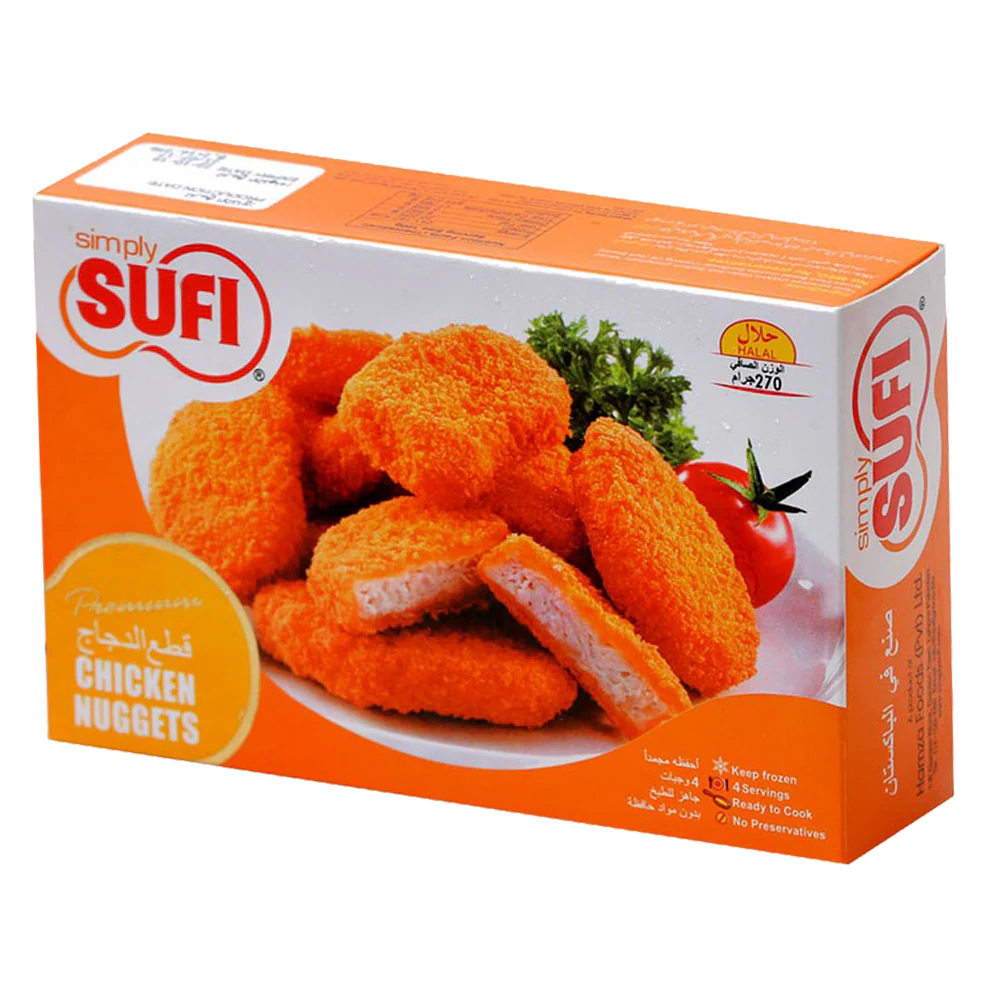
In a saturated market, differentiation is essential. While stock packaging is functional, it doesn’t tell a story. Investing in custom Nugget Boxes allows you to tailor every aspect of the packaging to your specific needs.
Customisation allows you to adjust dimensions to perfectly fit your portion sizes, preventing the food from sliding around and looking messy. You can choose specific board grades to ensure the right level of thermal insulation. Most importantly, it gives you full creative control over the graphic design.
Imagine a box that reveals a witty message when opened, or one that has a tear-off coupon for the next purchase. These small details create memorable interactions. For UK businesses looking to build a loyal following, custom packaging is an investment that pays dividends in brand recall and customer loyalty. It transforms a commodity product into a branded experience.
Sourcing Your Packaging
Finding the right supplier is the final piece of the puzzle. You need a partner who understands the specific requirements of the food industry—hygiene standards, material safety, and supply chain reliability.
When looking for Nugget Boxes uk suppliers, consider their ability to scale with you. Can they handle small runs if you are just starting, or large wholesale orders as you expand? Do they offer storage solutions or just-in-time delivery? Local suppliers can often offer faster turnaround times and lower shipping costs compared to importing from overseas.
Reliability is crucial. Running out of boxes on a Friday night is a nightmare scenario for any takeaway. A good supplier will help you manage your inventory and ensure you always have stock on hand. Companies like wholesaleboxes.co.uk specialize in providing a wide range of packaging solutions, offering expertise to help you navigate the myriad of options available.
Adapting to Consumer Trends
The nugget market isn’t just about chicken anymore. With the explosion of plant-based diets, “nuggets” can now be made from seitan, tofu, or mycoprotein. Nuggets Boxes need to be versatile enough to cater to these new products. Often, vegan consumers are even more environmentally conscious, making sustainable packaging materials a non-negotiable for this demographic.
Clear labelling is also becoming more important. If you sell both meat and plant-based options, having distinct packaging or clear tick-boxes on the exterior helps prevent mix-ups and assures customers they are getting exactly what they ordered. This attention to detail builds trust and inclusivity.
Frequently Asked Questions (FAQs)
What is the best material to keep nuggets crispy?
The best material is high-quality paperboard or cardboard with adequate ventilation. The material absorbs some excess oil, while ventilation holes allow steam to escape. If steam is trapped inside a sealed container (like plastic or styrofoam), it condenses back onto the food, making the nuggets soggy.
Are your boxes suitable for microwave use?
Most paperboard boxes are microwave-safe, which is great for customers who want to reheat their leftovers. However, you must check that the boxes do not contain any metallic foils or specific plastic linings that are not microwave-safe. Always verify the specifications with your manufacturer to be sure.
Can I get custom printing for small orders?
Yes, many suppliers now offer digital printing services which are cost-effective for smaller runs. This allows small businesses to have professional-looking branded packaging without the high setup costs associated with traditional lithographic or flexographic printing methods used for bulk orders.
How do I prevent grease spots on the outside of the box?
To prevent unsightly grease marks, you should choose boxes that have a grease-resistant lining (often called a poly-lining or aqueous coating) on the inside. Alternatively, you can line the box with greaseproof paper or a food-safe wax sheet before placing the food inside.
Are these boxes recyclable?
Generally, yes. Cardboard boxes are widely recyclable in the UK. However, if the box is heavily soiled with grease or food residue, it may not be accepted in standard paper recycling streams. Boxes with plastic linings typically need to be sent to specialized facilities, whereas those with clay or aqueous coatings are easier to recycle. Compostable options are also an excellent alternative for eco-friendly disposal.